

Thermochemical reforming
Heat and pressure in the absence of oxygen rearrange a complex distribution of organic molecules into a stable liquid: bio-oil.
How the conversion worksBio-based industrial materials · Ohio, USA
Concentrated animal agriculture produces more waste than the land can absorb. NuVention Solutions reforms the solids into bio-oil and formulates it into bio resource resin — a family of products that modify asphalt, build roofing and coat fertiliser — while an algae loop takes the nutrients back out of the water.
The problem
In the United States, livestock produce more than 900 million tons of waste every year. Because production clusters in a relatively small number of rural counties, the waste arrives faster than the soil and crops around it can use.
Once the soil is saturated, the surplus does not stay put. Rain moves pathogens, nitrates and phosphorus into public waterways, where the consequences range from algal blooms and dead zones to contaminated drinking water. The nutrients are not a small residue — they are the bulk of what is left over.
Most management options address one stream and leave the other. Drying and land application handle solids; lagoons hold liquids until they can be pumped out. Neither closes the loop.
The solid fraction is energy-dense and chemically similar enough to petroleum to be reformed into a liquid carrier.
Nitrogen and phosphorus stay in the water. Phosphorus in the liquid fraction commonly exceeds 3,000 mg/L — orders of magnitude above what a waterway can absorb.
Untreated storage releases methane and volatile compounds, so an untreated lagoon is a climate liability as well as a water one.
The approach
NuVention Solutions is commercialising a two-track process: a thermochemical route that turns solids into bio-oil, and a biological route that recovers the nutrients left in the water.
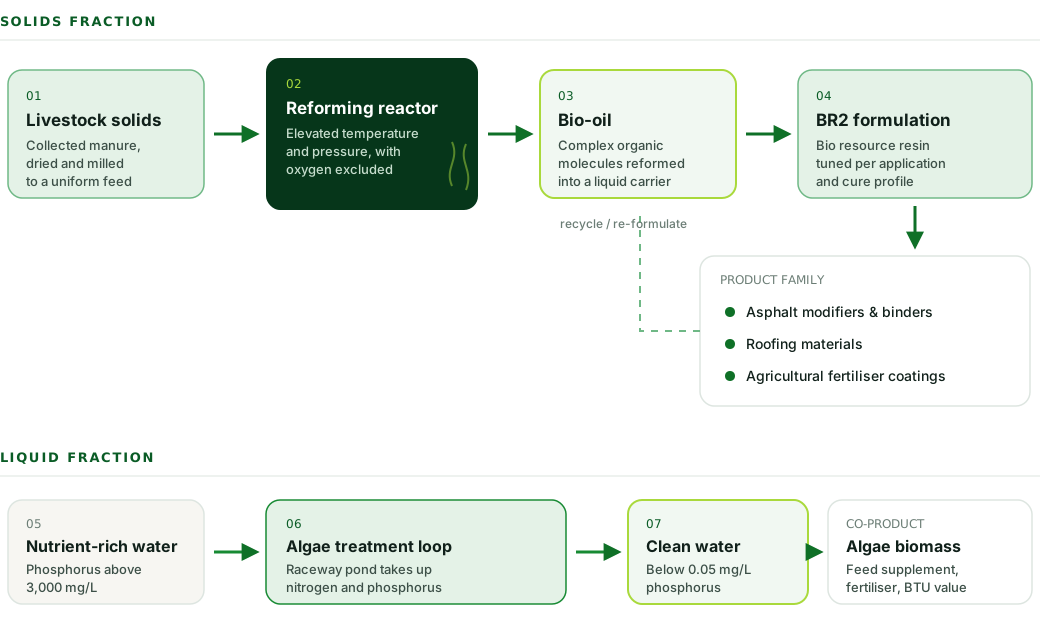
Heat and pressure in the absence of oxygen rearrange a complex distribution of organic molecules into a stable liquid: bio-oil.
How the conversion worksBio-oil on its own is not a product. It is formulated into a versatile group of bio resource resins, tuned to the application and the cure profile it needs.
Product familyThe liquid fraction is treated in an algae loop that takes up the remaining nutrients, turning a disposal problem into a second product stream.
Water treatmentBio resource resin
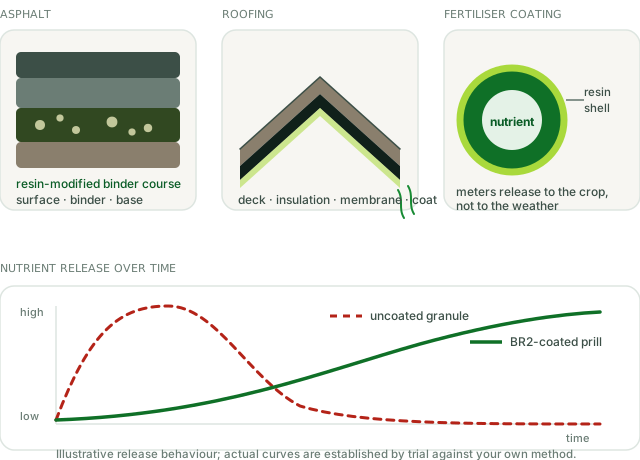
The point of reformulating waste into a resin is that the output substitutes for something industry already buys in large volumes. NuVention Solutions began selling bio resource resin products in 2012, targeting applications where a bio-based feedstream is a functional drop-in rather than a novelty.
By the numbers
Figures are the ones the company publishes about its own process and the US livestock sector; they describe the opportunity and the demonstrated removal, not audited production volumes.
Where it applies
Counties where animal production outruns the assimilative capacity of the land.
02Asphalt producers looking for binders and modifiers with a non-petroleum feedstream.
03Membrane and coating manufacturers balancing performance against feedstock risk.
04Coated fertiliser that meters nutrient release to the crop rather than the weather.
We work with producers, asphalt and roofing manufacturers, fertiliser formulators and research partners. Tell us the feedstream and the product you need.