
Where it lands
Four industries, one feedstream
The technology only matters if the output has somewhere to go. These are the places bio resource resin and the algae loop are aimed.
Livestock-dense regions
Where animal production clusters, the waste arrives faster than the surrounding land can absorb it — and the surplus leaves the farm as runoff.
This is the constraint the company was built around. In the United States, livestock produce more than 900 million tons of waste a year, and it is not spread evenly: it concentrates in a limited number of rural areas, oversaturating the soil.
The consequence is not only on the farm. Once the soil is saturated, rain carries pathogens, nitrates and phosphorus into public waterways. A solution that only reduces the volume stored on site does not change where the nutrients end up.
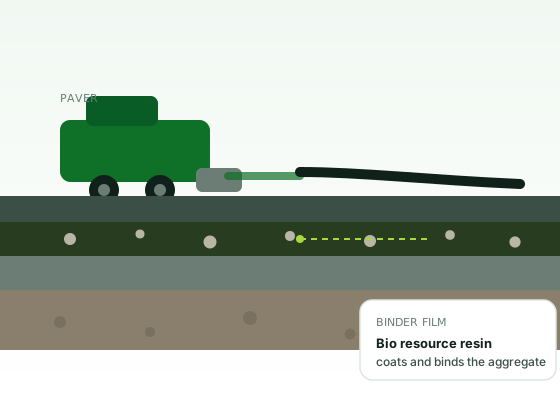
Asphalt modifiers & binders
A large, specification-driven market that consumes petroleum binder by the million tons — which is exactly what makes it worth substituting.
Asphalt producers care about performance in the mix and about feedstock exposure. A bio-based binder derived from reformed animal waste addresses the second without asking the first to be renegotiated: the resin is formulated into the existing mix design.
- You bringMix design & spec
- We bringResin candidate
- First stepBench trial
Roofing materials
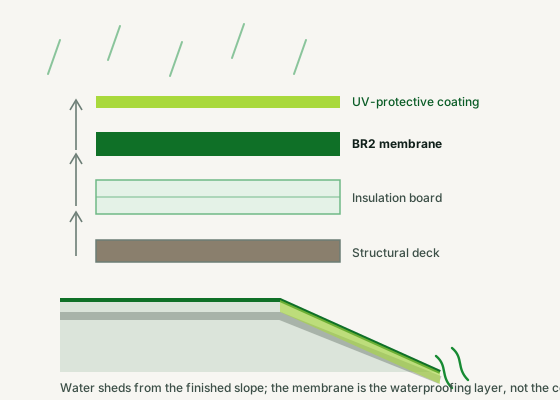
Membranes and coatings are judged by durability and by how predictably they cure on site — a formulation problem before it is a sustainability one.
Roofing is another high-volume destination for resinous material. The work here is matching the cure profile and weathering performance of a system that a manufacturer already has in the field, so the bio-based content is a substitution rather than a redesign.
- Performance barSet by weathering
- Key variablesCure · adhesion · durability
- First stepCoating trial
Fertiliser coatings
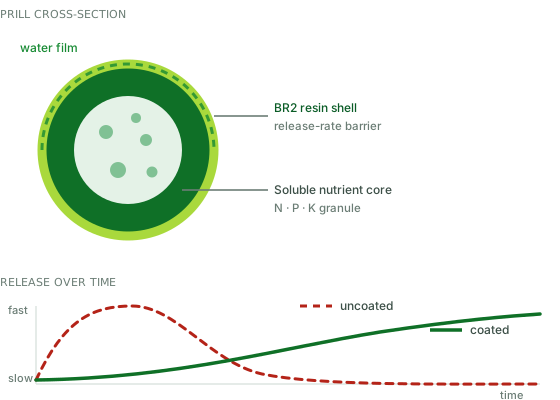
A coating that meters nutrient release to the crop closes the loop: the same nutrients that cause runoff when they arrive all at once are useful when they arrive slowly.
Coated fertiliser is a natural fit for a film-forming resin, and it connects the product line back to the water-quality problem the company started with. Less soluble nutrient lost to runoff also means more of what a grower paid for reaches the plant.
- FunctionRelease-rate control
- BenefitLess nutrient loss
- First stepRelease-curve trial
Water quality and nutrient management
The algae loop is relevant wherever dissolved nutrients — not solids — are the problem.
For a farm, the value is an affordable manure management option that produces usable bio-oil and algae instead of a disposal bill. For a watershed, the value is the number: phosphorus in the waste water reduced from over 3,000 mg/L to below 0.05 mg/L.
The harvested algae creates a fourth product stream — feed supplements, fertiliser, and usable BTU value — which is what makes the treatment economic rather than purely regulatory.
How the algae loop works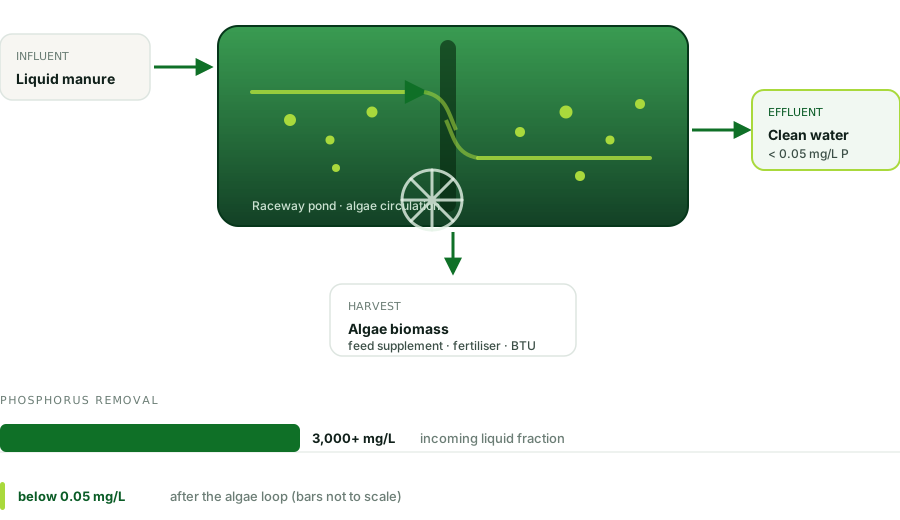
How we work
Small company, direct conversations
Feedstream
What you handle today, and in what quantity.
Application
The product you want it to become, and its specification.
Trial
A candidate resin tested against your own method.
Supply
Volume, logistics and specification sheets.
Tell us which one you are
Producer, asphalt supplier, roofing manufacturer, fertiliser formulator, or research partner — the first conversation is the same.